Showing posts with label breast milk. Show all posts

Wednesday, February 22, 2017

How Formula and Fear Ended My First Breastfeeding Journey

The year was 1997, and I entered the hospital where I was planning to birth my first baby. I had read all the books, taken the classes and prepared to the best of my ability for my impending birth. My rolling luggage contained all the supplies recommended by the Lamaze teacher and close friends. I had a well-thought out Birth Plan. In all honesty, my entire plan consisted of avoiding medications and birthing a baby. I assumed that the hospital staff would fill in any blanks I had forgotten to complete. My "water broke" at home, so the hospital policy stressed the importance of remaining in bed to avoid "severe infection." Since we had not discussed this in prenatal classes, I deferred to the attending nurse.

The contractions were as regular as the hands on a clock, which caused the staff to predict a "fast labor." The nurse approached me and explained that the labor could and should be hastened, so I could deliver my baby before the day was out. I excitedly agreed--not comprehending that I was consenting to Pitocin administration. Almost immediately, I was consumed with incredible pain and fear. My body was reacting in a way that seemed uncontrolled or understood by my mind. I was still trying to focus, but was not as successful as I had been the previous hours.

Again, I was approached with an option of "lessening the pain" and "taking the edge off." The nurse offered a visit from the anesthesiologist who would happily provide the epidural--resulting in a "pain free birth." I declined, not because I did not want the relief, but because I had predetermined my pain management goals.

A few hours of intense labor and my son joined us earth-side. I was holding my perfect little baby and, for a time, everything was well in my world. I cuddled and stared in awe until we slept. I felt completely as ease while my baby and I synchronized our breaths and adjusted to our surroundings.

The shattering news was delivered only a few, short hours later. A new nurse (who replaced my kind, supportive day nurse) brought the discovery to my attention. She entered my room and abruptly stated that my son was jaundiced! I looked at her in confusion because we had not discussed this diagnosis in my prenatal classes. I asked if he would be all right. She said that his numbers were at eleven and he needed formula. She also stated that since my seven pound baby was very large, formula was a necessity. I reluctantly explained that I desired to breastfeed. Her quick, rehearsed response was, "Do you want this baby to live, or do you want to breastfeed?" What a terrifying question to be presented with just hours postpartum. What is jaundice? Why is my baby's weight an issue? There were no explanations, just fear and accusations. I immediately consented to formula--considering the alternative that was provided.   I was extremely vigilant in offering a bottle, along with breastmilk for every feed, until I left the hospital. The following day, I was applauded for my baby's progress, which the nurse attributed to the formula. She discharged me with several containers of formula and admonished me to continue feeding formula to safeguard against tragic results.


I took my bundle of joy and bundle of formula and left the hospital. I religiously offered a bottle of formula several times a day to prevent whatever condition would develop without it. I was too afraid of putting my baby at risk to exclusively breastfeed. I never spoke of my breastfeeding journey with friends. I was too embarrassed about them knowing I almost put my baby's life in danger by my "selfish" desire to breastfeed.

My six week check up resulted in more congratulatory remarks about my baby's development. When asked about feeding, I responded with a pro-formula remark since I understood there was a "danger" associated with exclusive breastfeeding. My schedule of formula feeding was positively reinforced and I conceded that my pediatrician was favorable of formula feeding.

At six weeks, when my baby experienced "frequency days," I was convinced that my milk was insufficient to satisfy my baby. I increased the amount of formula, not realizing that in doing so, I was signaling my body to actually slow milk production. By now the free samples had disappeared and I was investing hundreds of dollars into a breastmilk substitute. I read all the propaganda and purchased the most attractive cans that touted a closeness to breastmilk. Once again, my ignorance won out. I invested in a product that was trying its best to mimic the fluid I had in abundance.


My breastfeeding journey ended so much sooner than I desired. I had a personal goal of nourishing my outside of the womb just as I had for nine months. No one questioned how my body could grow a baby for forty weeks. No one questioned if I was providing adequate nutrition in utero. No one questioned how my body sustained life, but outside of the womb, apparently, my body failed miserably at the task. I questioned everything about my parenting choices. I felt like a failure because I was pronounced a failure. Perception is reality.

My second child made her debut twenty-two months later--at a Baby Friendly designated hospital. My labor plan was supported and within a few hours, I held my daughter skin-to-skin and was breastfeeding. I was prepared to defend my choice this time. I had researched the AAP jaundice guidelines and realized that jaundice was a common condition due to extra red blood cells and I understood what numbers would constitute a legitimate concern. I was ready to confront the fear--but the fear never came. I also anticipated being judged for "giving only breastmilk" to my large baby. After all, she was about the same size as her brother at birth. The judgement never came. My little girl was weighed, her diapers were counted and I was encouraged to "keep up the good work." The following day, an IBCLC visited me to ask how breastfeeding felt and if I was experiencing any pain. She requested that I allow her to observe a feeding session. My little girl latched, sucked and fed for several minutes. The session was used to educate me on signs of milk transfer and recognizing swallows.

The following day, I left the hospital with my bundle of joy and bundle of confidence. I was equipped with knowledge and confidence. I knew my body was capable of nourishing my baby. I knew I could provide milk for my offspring just as every mammal does. I was not going to be bullied or scared into making a choice that I did not agree with. I was older, bolder and more educated.

The combination of advocating for myself and a hospital that supported breastfeeding made my dreams a reality. Breastfeeding continued until her first birthday--and a breastfeeding advocate was born.

My third child presented some feeding challenges. We worked through issues with an IBCLC and each problem I encountered was resolved with a solution that allowed me to continue my breastfeeding relationship. When the issue of jaundice surfaced this time, I supplemented for twenty-four hours with my own expressed breastmilk. I was surprised that this little girl trumped her brother in size. Her birth weight prompted the nurse to advice breastfeeding "every chance I got." A quote that was not followed up with any severe warnings or fear mongering. My hospital stay consisted of small snacks, skin-to-skin holds and frequent feeding. My baby and I were only separated when I showered (at which time she transferred from my chest to her father's). I could not help but contrast this scenario with my first birth. I wondered what that event would have looked like had I been knowledgeable and supported.

Yes, hindsight it 50-50, but I hope foresight can be as well. We have come a long way in our birth and breastfeeding practices. The Baby Friendly Hospital Initiative has laid some great ground-work and provided a foundation for providing in-hospital breastfeeding support. The initiatives, protocols, policies--all aided by skilled and educated health professionals are helping to bring instinct and the biological norms back into the highly medicated and routinely intrusive process of hospital birth.

For those who find themselves where I was as a first-time mom, let me offer you the information and support I so desperately needed. First, you need to know you are amazing. You are, after all, capable of making a person! Your body is a super-factory that is able to create the most intricate life form known. Simultaneously, your body is preparing the perfect nourishment for its creation. What a spectacular system you are equipped with.

Secondly, know that you will face adversaries in your quest to breastfeed. There are people who have made a point to question your ability. I am both saddened and angered that instead of celebrating the power and strength of a woman, some choose to undermine and minimize the uniqueness of our gender. I suppose there are many reasons for the skepticism. Some sabotage breastfeeding for a profit, some out of ignorance and a few from habit. Old wives' tales are difficult to shake.

Here are a few reassuring points you need to commit to memory.


  1. Your baby is not born "starving." Although food is often withheld from the laboring woman, the baby's access to nourishment is not interrupted in the womb.
  2. Baby's are not born with an "empty" stomach. There is research on how much fluid a baby's empty stomach can hold and malicious people are using that information to question a woman's ability to satisfy her newborn. Remember, baby's gauge is not on "empty" at birth.
  3. Mammals have milk for their offspring and instinctively nurse. Visit any zoo, wild animal park, pet store, etc. and ask to see the resident "lactation consultant." You will be met with blank stares and confusion. Mammals have been feeding their newborns for generations.
  4. Babies have very tiny tummies. They are born with a desire to suck and suck they will. The more frequently the better. Because the suck reflex exists, if a baby is placed on the breast, he will often begin feeding spontaneously. The baby that is fed frequently, will be satisfied and signal (through hormones and biology) for the mother's breasts to make more milk. 
  5. Moms have thick, rich milk the first few days that is full of protective factors and concentrated nutrients. This milk also has a mild laxative effect that encourages the expelling of meconium and reduces the risk of jaundice.
  6. Since babies have tiny tummies and moms have small amounts of colostrum, the baby can eat constantly and not get overfed.  In fact, when the baby is satisfied, the suck will change from active eating to pacifying--another way a newborn instinctively stops himself from eating to the point of discomfort. 
  7. The best way to make milk is by removing milk. Early, frequent feeds is the key. If a mom and baby are separated at birth, mom should remove milk manually or with a pump within six hours of delivery.
  8. For full-term, healthy newborns, breastmilk intake is not measured. It is preferred to allow mom and baby and partner time to recover and bond. Measuring intake is not necessary since there are more favorable ways to ensure milk transfer.
  9. Babies should have one wet diaper for every twenty-four hours of life until around day six, when they will begin having 8-10 wet diapers daily. 
  10. Initial weight loss is common. Babies should return to birth weight by two weeks of age. It is important to get a good weight at discharge or the first week of life to make certain baby is gaining weight. 

Christy Jo Hendricks, IBCLC, invented the Lactation Lanyard to remind mothers that their milk supply is the standard for feeding, NOT the formula bottles.

The first few days after delivery is mostly about bonding, recovery and feeding. Most women who can birth can also breastfeed. It is the way a mammals body works. There are conditions (like the ones I had after delivering my third child) that require intervention and support.

Warning signs can include:

  • No, or little diaper output
  • Discontent, inconsolable infant
  • Continued weight loss
  • Signs of dehydration
  • High billirubin
  • Constant feeding without satisfaction
The breastfeeding mother may show warning signs:
  • Little or no change in her breasts during pregnancy
  • Breasts that do not feel softer after a feeding
  • Pain while breastfeeding
  • Diagnosis of retained placenta
The above is not an exhaustive list nor is it a list of reasons to abandon the breastfeeding path. These are, however, a few reasons to involve an IBCLC in your journey. Occasionally, temporary supplementation is necessary or even long-term supplementation, but a lactation professional can advise you on how much more milk is needed and what kind of supplementation is available.

Data shows that most moms want to breastfeed. Who are we to downplay their desires. We should do all we can to support the goals of women in our society, who, after all, are creating society. To effortlessly dismiss a woman's goal of providing human milk to her newborn or to sabotage her goals with fear and false information is disgraceful.

I have spoken with many women who feel robbed of the breastfeeding experience and others that are angry that they did not have the support or education that would have resolved their issues. The groups that are preying on these women to gain followers or instigate more anger and resentment are indeed deplorable. I hope we can see our government, communities, families, health agencies and medical professionals working to support breastfeeding and empower moms rather than stripping them of their goals and power.


Saturday, October 8, 2016

When Natural Disasters Strike, Breastfeeding Matters

Hurricane Katrina NOLA.com
Earthquakes, floods, tornadoes, fires. Recent years have seen their share of natural disasters and emergencies which will only continue to occur with the passing of time. Even now, a State of Emergency has been declared for Hurricane Matthew, and heightened seismic activity at the Salton Sea has prompted scientists to warn of the elevated risk for “The Big One” at San Andreas fault.
Disasters and emergencies, while incredibly devastating, invoke a sense of camaraderie as people from all walks of life and differing backgrounds join together to help; to donate. While the intention is good, the protocol of infant feeding during natural disasters in particular needs dire improvement. This problem springboards from the lack of education on the importance of breastfeeding as a whole.
Hurricane Katrina shelter
Residents wait in line at the Superdome for shelter
during Hurricane Katrina. Image source: chron.com
Major health and aid agencies have come to a general consensus on how infant feeding issues should be addressed during disasters. They agree that the use of formula should only occur when mothers have weaned and relactation is not possible, or when the baby has lost its mother and wet nursing is not an option. They agree that ongoing support and assistance is necessary in such a case to limit the risks associated with artificial feeding, and that the distribution of breastmilk substitutes should be tightly controlled, carefully monitored and only provided to babies with a clear need.  
UNICEF, WHO, and the International Red Cross are active in alerting non-government organizations of the need to support breastfeeding and to be extremely careful in the distribution of breastmilk substitutes. Despite their efforts, and despite these guidelines, infant formula and bottles continue to be distributed unnecessarily during disaster situations.
During emergency situations, the cleanest, safest food is human milk.
Myth: Mothers who are under stress cannot breastfeed.

Fact: Mothers will continue to lactate in times of stress but will need adequate support.


Myth: If a mother is malnourished, she either cannot breastfeed or the milk she produces is poor quality.

Fact: Malnourished mothers or mothers with illnesses CAN provide healthy and safe milk for their babies.


The Problem with Formula Donations During Emergencies

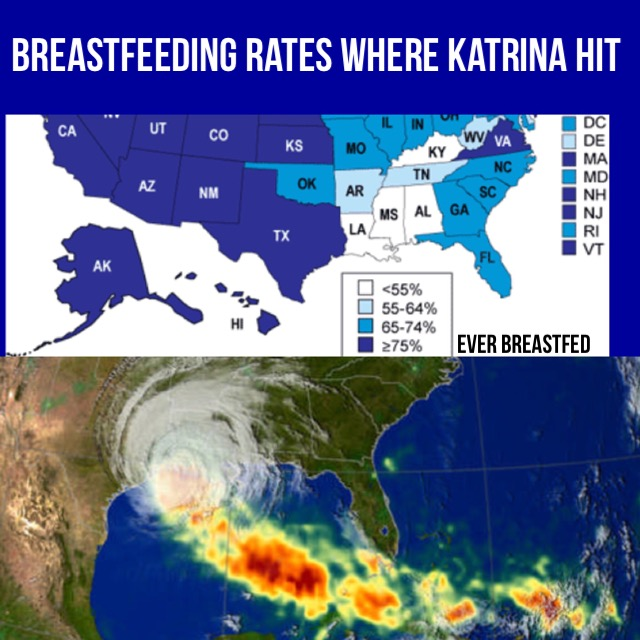
One of the biggest tragedies during Hurricane Katrina was that almost no breastfeeding mothers were found. One-third of Louisiana’s population was displaced, which was about 1,300,000 people, and more than 100,000 evacuees remained in shelters more than one month later.

The distribution of formula and bottles by aid workers during this time disregarded the importance of clean water and utensils to make feeding infants possible and safe, and the more time that passed, the higher the risks for infant mortality continued to climb.

According to the American Academy of Pediatrics, in any given emergency, clean drinking water and a sterile environment may be inaccessible. Even in a potentially less catastrophic emergency, such as being trapped in gridlock for several hours, access to water to make formula as well as the ability to clean and sterilize bottles or feeding utensils is not possible. Infants need to be fed every 2 to 3 hours. When disaster strikes, reality hits, and panic can ensue.

The WHO states that artificially fed babies have a 1300 percent increased risk of death from diarrhoeal disease as compared to babies that are breastfed. The WHO adds that babies who are artificially fed are inherently more vulnerable to disease because they do not receive the disease-fighting antibodies that are in breastmilk.

“In past emergencies, 12–75% of all babies have died, so any factor that increases disease transmission and reduces the ability of babies to withstand disease may well result in their death.” - World Health Organization

At the time of Hurricane Katrina, information was not readily available to support optimal infant nutrition; rescue workers were not trained in breastfeeding support and management. Overall, the distribution of formula discouraged breastfeeding, decreased mothers’ confidence, and increased the risk of infection, illness, and death.

The Clear Advantages of Breastfeeding During an Emergency

  • Provides comfort and relieves maternal anxiety
  • Protects against infectious diseases
  • Readily available
  • Nutritionally perfect
  • Perfect temperature
  • Fights Illness

The Disadvantages of Formula-Feeding During an Emergency

  • It may not be readily available
  • May become contaminated
  • Water mixed with powdered formula may be contaminated
  • There may be no means of refrigeration to preserve it
  • There may be no method to sterilize feeding utensils


While some strides have been made to educate about the importance of breastfeeding during disasters, the lack of normalcy is still present in our society and more efforts should be made to instill it in mothers, aid workers, and government agencies collectively. Milksharing or local donations of expressed milk should be a mainstream option to feed infants in dire cases.

Future natural disasters are inevitable and will continue to have a devastating effect on the economy and well-being of families. Protecting, promoting, and supporting breastfeeding during these natural disasters will help prevent long-term health and developmental problems that may occur as a result of alternative feeding methods. Encouraging breastfeeding will also lessen the economic blow, as the overall cost of the disaster is significantly reduced for both the families and societies affected. It is an investment that will pay for itself in more ways than one, several times over.

Contributing author: Samantha Johnson is a freelance writer, blogger, wife, and breastfeeding mom. Her Bachelor of Arts degree in journalism from California Baptist University has led to more than six years of full-time writing experience and countless exciting opportunities. Aside from writing, her passions include drawing, painting, iced coffee, reaching her goals, balancing life's priorities, and encouraging others. You can visit her blog at unlazylike.wordpress.com.

Thursday, February 12, 2015

The Slippery Slope of Supplementing

There are a few pieces of education that can prevent unnecessary supplementation of formula or unintentional weaning. One problem is that many people misinterpret baby behavior. A baby communicates various ways. He uses body language, head movements, hand gestures and crying as forms of expression. The crying stage is usually what brings on the bottle.  A baby's cry brings full attention to the situation. The cry is annoying, upsetting and a "call to action." It was designed that way. If a baby just whispered, "Hello, up there, I'm over here and I need you." More often than not, the busy, distracted people around would not be aroused to take action. Since the cry demands a response, parents begin the ritual of calming baby. If the baby does not settle right away, parents will often resort to a bottle assuming that their baby is hungry. The bottle will elicit the suck reflex, making it difficult to cry. The baby also soothes by sucking so he continues to suck for comfort which reassures the parents that baby was indeed hungry. This sucking reflex is just that--a reflex. When we go to the doctor and he checks our patellar reflex with a hammer, if our leg spontaneously jerks forward, the doctor does not exclaim, "She wants to play soccer, see, just confirmed it!" That would be ridiculous, yet we use this reasoning when deciding that a baby needed supplements.


Everyone must also learn to appreciate and respect the fact that a woman's body and baby communicate through a series of events. Baby does at times need more milk and he must communicate this. The infant will "place his order" by frequently visiting the breast. He even tells his mother's body that he is not satisfied. He fusses, grunts, pulls his head back and arches his back. This arrangement convinces the mom's body to step up production. Many professionals used to refer to these stages as "growth spurts," until it was shown that growth does not necessarily coincide with the frequent breastfeeding. More recently, the feeding frenzies are being called, "frequency days." However they are labeled, they do occur and are necessary for regulating milk supply.

The body is amazing. It does not have to store all the milk the baby needs per day or week. It creates milk made to order. If a baby needs more, he expresses his desire and the breast-feeder complies.  Herein lies the problem. If a baby is given a bottle during these moments of frustration, it communicates with the woman's body, "Never mind, seems like baby is satisfied, it was a false alarm." The mom's body has no reason to produce more. The next time baby models the same behavior, parents may respond with the same solution. The baby will often take more from the bottle and if the supplement is formula, the ingredients are more difficult to digest and this "heavy" meal may encourage baby to sleep longer. A longer nap will also communicate to Mom's body that baby doesn't eat as frequently and she doesn't need to make milk as often. Next. the mom will notice a definite decline in milk, convincing her to supplement even more. Unfortunately, this unintentional weaning happens too often. Disappointed moms feel as though they were broken and could not effectively breastfeed. They think they were starving their newborn because he appeared unsatisfied with her milk, not knowing that this protesting was the exact recipe for increasing milk supply. If moms were encouraged to trust their amazing bodies and constantly put baby to breast so he could effectively communicate his needs and that the body would respond to meet those needs, we would see women empowered rather than defeated.

The good news is that the woman's body still wants to feed and meet the needs of her baby. The situation can be reversed. Mom must put baby to breast every time baby will nuzzle, suck, cuddle or nurse from the breast. It is also a good idea to practice skin-to-skin and get oxytocin freely flowing. Without this contact, the mother's body is persuaded that the baby is getting fed elsewhere and it needs to shut down production.

If breastfeeding has stopped completely, contact an IBCLC to help with re-lactation. Lactation Consultants can also help the mother who needs to supplement by sharing ways to continue the breastfeeding relationship and instruct on how much supplementation is necessary.

Interested in becoming a Certified Lactation Educator (CLE) and sharing evidence-based education with others? Sign up for an upcoming training on the Birthing, Bonding and Breastfeeding website.


Saturday, October 25, 2014

Attack Formula Companies--Not Formula Feeders

It's here, another way to stop breastfeeding advocates and create a wedge between breastfeeders and formula-feeders. Blogs like, "I Don't Breastfeed and It's None of Your Business" exist to stir up emotions and create conflict. The problem I see with these posts and other seemingly anti-breastfeeding rants, is that they attempt to silence breastfeeding advocates, and encourage acceptance of formula "as is." The posts almost imply "leave my formula alone!"

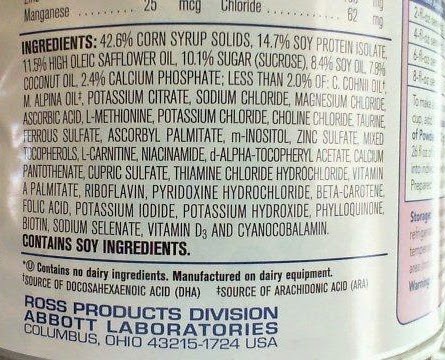
But, alas, the formula companies had to do something fast to protect their market shares. There is a new battle on the forefront from both breastfeeding and formula-feeding families, it is a campaign worth of bipartisan support--improve formula ingredients and demand the manufactures use higher quality products in their manufacturing and eliminate harmful ingredients (like corn syrup solids and dangerous chemicals). Some countries do not even allow corn syrup solids in their infant foods, but in the United States we have them in spades. If formula companies can move the focus off of their companies to "nosy, judgmental, holier-than-thou, breastfeeders," well, then, they win. They strive to have a product that no one will oppose--an ambition I plan to thwart.
Similac formula in the US

Formula label in Australia

Enfamil ProSobee in the US

I have NEVER attacked a formula-feeder (and for those curious, I was one), but I definitely support breastmilk, and believe moms who must supplement deserve a better option than the ones currently on the market. If we, as a society, strive to protect babies and families who need supplements, we can affect great change. I do not know of one formula-feeding mom who does not want the best for her infant, and she has chosen the only option available to her. Unfortunately, the best alternative is not good enough. Formula companies use taglines such as, "Closer than ever to breastmilk," but in reality, that can refer to the color of the fluid or a myriad of other conditions. Formula is missing many key ingredients, some of which cannot be replicated.


Let's face it, we live in a world of ever-changing technology, Purchase a new state-of-the-art phone or computer and walk out the door of the electronics store only to discover your new purchase is already being replaced by another model. Markets are consumer driven. Companies make what sells and they are constantly fighting for the market. Since we are not demanding better quality from infant foods, no one is striving to make improvements. We cannot be ignorant of the strategies formula companies use--if they can keep breastfeeding moms fighting formula-feeding moms, no one will think to fight THEM. If we demand better ingredients, formula companies lose money. If we make banked-donor milk available, formula companies lose money, if we support breastfeeding and provide support to families, formula companies lose money--follow the money.

As an IBCLC and Public Health Educator, I have asked moms the question about why they are not breastfeeding and have heard a plethora of reasons. I have heard they were having difficulty and had no help; needed to return to wok and did not have a pump; were undergoing cancer treatment, which is contraindicated to breastfeeding; were getting ridiculed by family or partner; did not want to; and many more responses. Fortunately, I asked, because in asking I was able to learn their reasons and help them overcome some of their obstacles. I was also able to find supplements that worked for them, offer education and support, or just sit with them and helped them cry. When we show compassion, empathy, sincerity and love, people understand we genuinely care.

I am convinced this entire argument is less about the asking and more about how we ask; and, to be fair, it also has something to do with how the question is received. Take time to ask, but more importantly take time to listen.

Let me paint a different scenario on how formula-feeders have used their conditions to promote breastfeeding. I have worked with or consulted for over a dozen women with cancer or going through treatments,and they are using their struggles to educate and advocate. They honestly do not mind talking about why they cannot breastfeed and why their babies deserve better options than what is currently on the market. They use their conditions as an opportunity to shed light on how limited their feeding choices are. They advocate for more breastmilk banks (like blood banks), some even share their story publicly. I personally, love that approach.
Collecting donor milk for her baby to give while undergoing iodine treatment for thyroid cancer

No one should ever feel shamed or attacked for their feeding choice, but no one should feel silenced for sharing truth either. This is not a battle among mothers, this is a battle against large conglomerates that are forcing society to accept the status quo. Be nice, share evidence-based information, and stay sensitive. Seems simple.

Sunday, August 7, 2011

Preface to The Truth about Infant Formula

I have been asked to share the information about formula and advertising that I presented at a recent conference concerning infant formula and how it is marketed in our Western Culture. This will undoubtedly have to be a multi-part series, so let me begin with the Preface.

Scientists, doctors, nurses, medical professionals--all agree and validate the fact that breastmilk is not only the ideal food for infants, but also that children can experience sickness and disease if it is withheld from them, yet, mothers still turn to formula as a legitimate alternative to breastmilk.  Families are targeted by an industry that spends millions of dollars annually to advertise.  They invest heavily in misleading unsuspecting audiences and unfortunately, the payoff is great. According to Companiesandmarkets.com, baby foods and infant formula market is projected to reach about US $2.3 billion by the year 2015.


There's an entire history of formula that hopefully I will be able to write about later.  But in a nutshell, formula was just that a "formula" concocted to sustain life in a moment's notice--in emergencies when a mother was unable to provide breastmilk and a wet nurse was unavailable.  It was a scientific breakthrough and an incredible contribution to the medical world.

History does not only repeat itself in regards to formula advertising...it practically mimics the tone and inflection of each word as noted in this 1920s ad.


A good history lesson written can be found at Dispelling Breastfeeding Myths

I like to compare infant formula to Total Parenteral Nutrition (TPN). TPN is nutrition given via a catheter when a person cannot tolerate food.  There are risks of infection, blood clots and other complications.  It is not ideal, but is a legitimate substitute in dire circumstances.  As useful and necessary as TPN is, a medical professional would never say, "TPN is easier than preparing food and it has all the ingredients that food has, so you can just TPN feed."

I hope my point comes across graciously.  I know there is a place for formula (artificial baby milk), but its place is not in the gut of a baby when it is not medically necessary.  There is a hierarchy of infant feeding that begins with mother's own milk, goes through the list of donor milk and finally ends with formula, but make no mistake, formula does do it's job at sustaining life, and the "formula" has improved over the years. I don't think the formula product is the real culprit in our battle to encourage breastfeeding or to educate moms, but the advertising techniques and the misleading information being promoted is what we must expose and combat.

My next posting will undoubtedly contain several photos and formula labels depicting the false advetising, but as a sample, I will demonstrate some "misleading" advertising on the new Enafamil Premium box...the side of the box boasts: "New! Natural Defense Dual Prebiotics for digestive health.  Enfamil Premium provides these three proven* benefits...

The front of the box mirrors these statements:

The discerning individual will trace the asterisk (*) and try to locate the information that expounds on the study, one must look hard to locate the additional information...kind of like "Where's Waldo"...not only is it small print, but it also lays at an unnatural angle.  People read left to right and would naturally turn their head to read the statement, but the clever (well planned) placement of the note forces the reader to turn the box upside-down to solve the puzzle...yes, this is strategic.  Also, the phrase "Natural Defense" is a trademark, it does not mean that this formula has an actual natural defense, the trademark name suggests the like, but once again it is strategic advertising. Even the packaging and labeling attempt to lure consumers.  The new packaging is a gold, metallic box with the name "Premium." posted predominately on the front. Just a glance across the supermarket shelves reveals that a savvy advertiser has this box shouting, "Pick me!"

Another aspect of advertising would be the violation of the WHO Code, once again something that needs mentioning, but would constitute another writing segment.  There is some good information already in print about the Code and how it is being violated on a regular basis by formula companies.  Jump over to the 24 page pdf of the WHO Code of Marketing of Breastmilk Substitutes to read the original Code, then dive into some of the blogs and articles showing how the Code is violated on a regular basis.


My favorite media clip of the Code violation was created by some of my GOO Students as a class project this year.  They used the "CSI" approach and arrested a can of formula for being in violation of the Who Code and announced that the formula was going to be put in the "can."  I had it posted on my site for awhile, but lost it over time...great concept though...someone needs to hold the companies accountable.

This part may get a little off track, but what about Fair Advertising, violations of the WHO Code and class action litigation, and the National Advertising Division's involvement with regulating advertising?  Well, STATE COURT CLASS ACTION SETTLEMENTS:  A PATTERN OF ABUSE AND A 
PROPOSED SOLUTION made the following observations and cited the lawsuit Free v. Abott Laboratories

Every year, thousands of class actions are filed in the United States – the vast majority in our state court system.  The attorneys who file these lawsuits purport to represent thousands or even  millions of allegedly injured individuals.  But too frequently, the interests of the supposedly
injured parties are not really represented at all.  Instead of pursuing the interests of their supposed clients, the attorneys strike a deal under which the money ends up in their own pockets– rather than the hands of the supposedly injured parties they claim to represent.  The result is more and more class action filings, concentrated in certain state courts, and a growing pattern of settlement abuse.
 Free v. Abbott Laboratories
 In this infant formula antitrust action, the district court concluded that the proposed settlement was neither fair, nor adequate, nor reasonable, because members of the class would receive no more than four to six dollars (a tiny fraction of the $4.3 million dollar settlement) each, while their attorneys would receive $1.5 million dollars.  
Even when these companies have to "pay the price" they pay it to the pockets of attorneys and the media rarely considers the rulings newsworthy.  Exposure of lawsuits, recalls, detrimental chemicals found in formula, bug parts discovered in powdered cans--all need exposure and media attention on a regular basis, not just as a means of promoting breastfeeding, but to scrutinize formula for mothers that trust it to nourish their young.  Accountability is always a good thing.

Sunday, May 1, 2011

Biochemistry of Human Milk

Biochemistry is the study of the structure, composition, and chemical reactions of substances in living systems. Biochemistry emerged as a separate discipline when scientists combined biology with organic, inorganic, or physical chemistry and began to study such topics as how living things obtain energy from food, the chemical basis of heredity, and what fundamental changes occur in disease. Biochemistry includes the sciences of molecular biology; immunochemistry; neurochemistry; and bioinorganic, bioorganic, and biophysical chemistry.
With the broad definition of biochemistry, it is obvious that a blog cannot do human milk justice, but I do have some points to share. I have been fascinated with this topic since I began my work in lactation.  In fact, one of my early projects was creating a visual that would allow parents to see in a snap shot how unique breastmilk is. I had seen a list of basic ingredients found in breastmilk compared to those in artificial human milk (formula).  I commenced to build a 3D image of my understanding and the "Lego Stack or Brick Building Block" emerged from my work.  I invented this tool back in 2001 and it has traveled across the US and is used in California WIC instructional material.  I am including a picture of the handout that accompanies the curriculum here, but the idea is to use a set of large building blocks (or duplo legos) and place one "ingredient" on top of the other as the properties of the ingredients are discussed.  At the end of the demo, the breastmilk stack dwarfs the formula stack.  It leaves quite the impression.
Since I created this simple illustration, I have learned so much more about breastmilk's composition.  I wish I could share my entire PowerPoint on Human Milk for Human Babies, but I will do my best to highlight some of the information.  One main  point is that human milk is species-specific.  Just a comparison of different mammals and their milk composition verifies this statement.  If we were to be fair and pick the mammal whose milk has many of the same ingredient percentages as humans, we would most likely be giving our infants donkey or cat milk.  I can't imagine having cat farms of lactating felines to feed our infants, but really, what's the difference between that and cattle farms?  Just a little regression to point out the humor in our loyalty to cow's milk formula.  


Breastmilk, unlike formula is a living organism.  When one looks at breastmilk under a microscope there is plenty of movement.  Contrast that with formula, where the petri dish reveals a stagnant state.  Formula is dead.  It cannot change to meet the needs of a particular infant.  It does not change during a feed.  In fact, the first drop given to an infant at day one is mirrored in the last drop he receives at one year.  Formula companies are now trying to market this change by creating "stage formulas", another gimmick for marketing. (I recently saw a formula ad that stated, "now, one step closer to breastmilk."  Here is a way to put that claim in perspective, stand at attention, move one step to the right and then declare, "I am now one step closer to China"--not anywhere near China, mind you, but able to make an honest statement, providing your geography is correct.  We have to all be aware of the claims marketing experts are making and be ready to expose the propaganda being used).


There are many articles that are well cited available for purchase.  These are the scholarly articles that appeal to the medical professionals and are written in journal language.  A few such articles are found at
http://www.ajcn.org/content/42/6/1299.abstract
http://www.springerlink.com/content/q33725u6p1530587/
http://www.ncbi.nlm.nih.gov/pubmed/6475139
http://www.askdrsears.com/html/2/t020800.asp


No study on milk composition is complete without mention of Marsha Walker's "Just One Bottle" paper  http://www.massbfc.org/formula/bottle.html
For those wanting some basic information on the biochemistry of human milk in order to be prepared for possible questions on the IBCLC Exam, every candidate should be familiar with the following facts:

  • Colostrum is high in protein, fat-soluble vitamins (A and E), minerals, and immunoglobulins. (antibodies that pass from the mother to the baby and provide passive immunity for the baby. Passive immunity protects the baby from a wide variety of bacterial and viral illnesses). 
  • Two to four days after birth, colostrum will be replaced by transitional milk in the full-term infant.
  • Colostrum's primary function is protective due to high immunological factors
  • Colostrum coats the sterile gut and protects from pathogens
  • Colostrum is lower in fat than mature milk
  • Secretory immunoglobulin A (SIgA) is highest in colostrum
  • Colostrum creates a laxative effect aiding in the elimination of bilirubin (reducing jaundice)
  • Transitional milk occurs after colostrum and lasts for approximately two weeks. The content of transitional milk includes high levels of fat, lactose, water-soluble vitamins, and contains more calories than colostrum.
  • Mature milk is the final milk that is produced. 85-90% is water, which is necessary to maintain hydration of the infant. The other 10-15% is comprised of carbohydrates, proteins, and fats which are necessary for both growth and energy. There are two types of mature milk: foremilk and hind-milk.
  • Human milk is higher in whey protein (cow's milk is higher in casein)
  • Human milk has the lowest total protein 
  • Human milk has 19 amino acids (for development)
  • Human milk has over 40 identified enzymes (aid in digestion)
  • Human milk is highest in lactose (carbohydrate) of all mammals (humans have the largest brain of all mammals at birth)
  • There is not much iron in human milk, but infants are born with a large physiologic stores (enough to last 6 months).  These stores are laid down the last trimester, so if an infant went to term, there is likely enough iron to avoid any supplements.  Also, infants absorb 50% of the iron found in breastmilk, but only 4% of the iron in formula and cereals, so it is misleading to point out that formula has more iron since it is not readily available to the infant.  
Obviously, I could go on and on.  In fact, more ingredients are discovered in breastmilk annually. As money is put into lactation research, this list will most definitely be expounded on.  I liken it to our space explorations and discoveries.  I remember in elementary school learning about the Milky Way as the only galaxy and now as I study with my children I am reminded that new planets, stars, other galaxies--have all recently been discovered and what we thought was an exhaustive list of space was actually very anemic compared to recent finding through exploration.  Stay tuned in to research and attend conferences where newly published information is presented.  This is fascinating stuff!  
Humans are obviously made to breastfeed.  Mom's milk is perfect for her individual infant(s).  My new tagline is, "designed to breastfeed." Isn't it nice when we do what we are designed to do?  I recently tried to hammer a nail with a heel of my shoe--it worked, but when I used a small hammer, it was much more effective.

Christy Jo Hendricks, IBCLC, Doula